Forty-five minutes down to seven. That’s not a typo — it’s what Madhya Pradesh’s longest flyover did to the Madan Mahal-Damoh Naka stretch the day it opened. Union Minister Nitin Gadkari and Chief Minister Mohan Yadav cut the ribbon on this seven-kilometre corridor, and the centrepiece is a 192-metre single-span cable-stayed bridge running straight over a railway line — an engineering choice that turned what used to be one of Jabalpur’s most dreaded commutes into something you barely notice. Here’s what changed and how to use it.
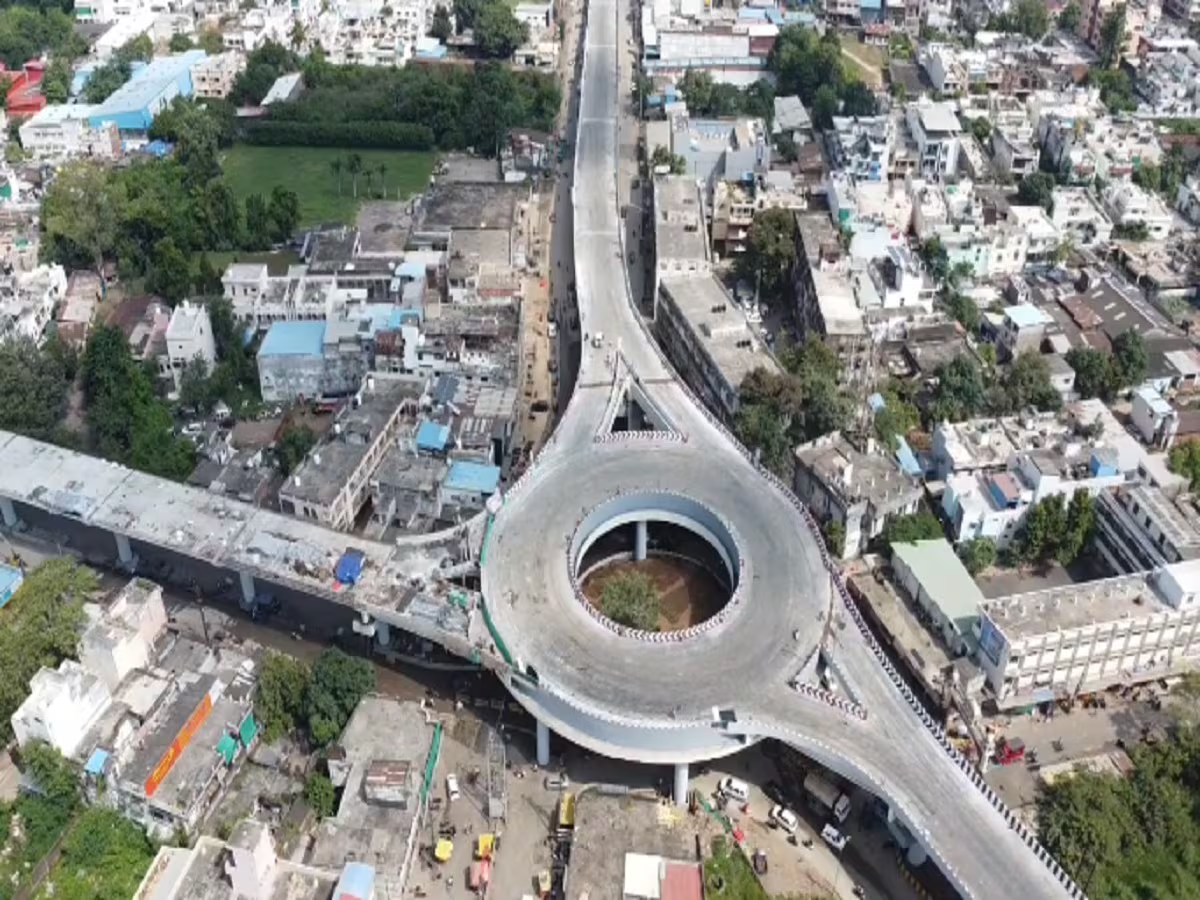
Quick Overview
| Aspect | Details |
| Location | Madan Mahal to Damoh Naka, Jabalpur, Madhya Pradesh |
| Length | 7 km, MP’s longest flyover |
| Standout feature | 192-metre single-span cable-stayed bridge over a railway line |
| Cost | Approximately Rs 1,200 crore |
| Travel time saved | From 40-45 minutes down to 6-7 minutes |
| Nearby rail hub | Jabalpur Junction Railway Station |
Why a Seven-Minute Commute Took Six Years to Build
Nitin Gadkari laid the foundation stone for this project back in 2019, and the road from groundbreaking to full operation ran through more than one election cycle. Ahead of the 2023 state assembly polls, then-Chief Minister Shivraj Singh Chouhan inaugurated the first completed stretch, running from Chhoti Line to Gulati Petrol Pump — enough to generate goodwill without finishing the whole corridor. The complete seven-kilometre span, cable-stayed bridge included, only opened fully in 2025 under CM Mohan Yadav.
What makes this project genuinely stand out isn’t just the length. Building a single-span cable-stayed bridge directly over an active railway line is a specific engineering choice — it avoids intermediate supports that would otherwise need to straddle the tracks below, keeping rail operations undisturbed while the flyover carries road traffic clean overhead. At Rs 1,200 crore, this was never a modest local project; it’s the kind of investment that signals Jabalpur’s growing importance within Madhya Pradesh’s urban infrastructure priorities.
Getting Around Jabalpur Flyover by Road
From Madan Mahal: This marks one end of the corridor, giving you direct elevated access toward Damoh Naka without the stop-start crawl that used to define this route.
From Damoh Naka: Travelling in the reverse direction brings you back toward Madan Mahal, cutting through what was previously the city’s most notorious bottleneck.
From Chhoti Line or Gulati Petrol Pump: These points mark the boundary of the flyover’s first completed phase, now fully integrated into the continuous seven-kilometre stretch.
Toward Jabalpur Junction Railway Station: Located in Civil Lines, the station connects to this corridor via local roads, giving rail travellers a considerably faster route into the city centre than existed before this flyover opened.
Given how recently the full corridor came online, it’s worth checking current traffic patterns occasionally as Jabalpur’s daily commuting habits settle into whatever rhythm develops around this dramatically shortened travel time.
Rail Connectivity Near Jabalpur Flyover
Jabalpur Junction, operated by West Central Railway under the Jabalpur Railway Division, sits on the Mumbai-Howrah Main Line and handles roughly 125,000 passengers daily as of 2026 estimates. Opened back in 1867 and now fully electrified with AC traction across its network, the station connects Jabalpur to Prayagraj, Bhusaval, Gondia, and Indore via Gadarwara — a genuinely significant rail hub for Madhya Pradesh’s eastern belt.
Seven platforms currently serve the station, with an eighth planned under the Adarsh Bharat Station Scheme, alongside proposed multi-level parking that should further ease congestion around this already busy junction once completed.
Nearby Landmarks Worth Knowing
- Madan Mahal — One end of the flyover corridor, a well-known Jabalpur locality with its own historical significance.
- Damoh Naka — The corridor’s other terminus, marking a major junction point in the city.
- Jabalpur Junction Railway Station — Located in Civil Lines, one of the busiest rail hubs in this part of Madhya Pradesh.
- Chhoti Line — The starting point of the flyover’s first completed phase, opened back in 2023.
- Gulati Petrol Pump — A recognizable local landmark marking the endpoint of that same early phase.
Bus Stops and Local Transport Options
Jabalpur’s Inter-State Bus Terminal (ISBT), located centrally in the city, connects the region to major destinations including Delhi and Lucknow, with a dedicated helpline for passenger queries and a spacious waiting area designed for long-distance travellers. For district-level connectivity, the Pandit Omkar Prasad Tiwari Bus Stand in Transport Nagar, also known locally as Chhetriya Bus Stand, handles routes serving areas within Jabalpur district itself.
For last-mile travel between the flyover corridor and either bus terminal, autos remain the standard option, given how the city’s public transport network still relies primarily on road-based connections rather than any rail-based city transit system.
Best Time to Travel Through Jabalpur Flyover
Given how dramatically this flyover has already cut travel time, timing matters considerably less here than it did before 2025 — a journey that used to eat up nearly an hour during peak congestion now runs in minutes regardless of when you travel. That said, weekday mornings and evenings still carry the standard commuter load feeding onto and off the flyover at Madan Mahal and Damoh Naka, so building in a small buffer during these windows remains a sensible habit even with the new infrastructure in place.
FAQs
Q1. How much travel time does the Jabalpur flyover actually save?
It cuts the Madan Mahal-Damoh Naka journey from roughly 40-45 minutes down to just 6-7 minutes, a change residents and daily commuters have described as genuinely transformative.
Q2. What makes the cable-stayed bridge section of this flyover unique?
It’s a 192-metre single-span structure built directly over an active railway line, an engineering approach that avoids intermediate supports interfering with rail operations below.
Q3. When did the full seven-kilometre corridor become operational?
The first phase, from Chhoti Line to Gulati Petrol Pump, opened in September 2023, with the complete corridor including the cable-stayed bridge inaugurated in 2025 by Nitin Gadkari and CM Mohan Yadav.
Q4. Is Jabalpur Junction Railway Station well connected to this flyover corridor?
Yes — located in Civil Lines, the station connects via local roads to the flyover, and with roughly 125,000 daily passengers, this corridor genuinely eases access for rail travellers heading into the city.

