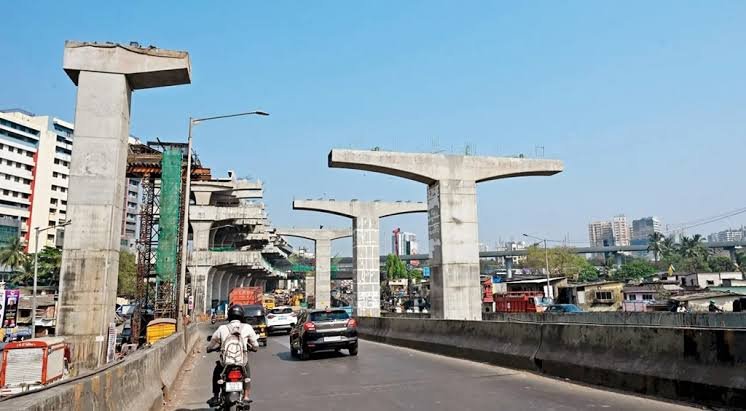
If you commute between Andheri, Jogeshwari, Powai, or Vikhroli, the Jogeshwari-Vikhroli Link Road, universally known as JVLR, is genuinely one of Mumbai’s most important east-west corridors. This 10.6 km, six-lane road has connected the Western and Eastern Express Highways since 1994, and it’s currently undergoing a genuinely transformative upgrade — a double-decker flyover integrated with Metro Line 6, expected to reach completion in 2026. Whether you’re commuting daily through this corridor, heading toward Powai, or simply navigating this busy stretch for the first time, understanding how JVLR connects everything makes your travel considerably smoother.
Quick Overview
| Aspect | Details |
| Full name | Jogeshwari-Vikhroli Link Road (JVLR) |
| Length | 10.6 km, six-lane road with central median |
| Major junctions | Saki Vihar Road (L&T junction), LBS Marg junction, SEEPZ |
| Upcoming project | Double-decker flyover integrated with Metro Line 6, targeted 2026 |
| Nearest metro stations | Jogeshwari (East), SEEPZ (Line 2A/7 and Line 3) |
| Public transport options | BEST buses, Mumbai Metro, autos, cabs |
Why JVLR Is Such a Genuinely Important Mumbai Corridor
JVLR was opened to traffic in 1994, providing at the time the only direct east-west link between the Western Express Highway and Eastern Express Highway. Before this road existed, connecting Jogeshwari in the western suburbs to Vikhroli in the eastern suburbs meant navigating a genuinely inconvenient detour, and JVLR’s construction fundamentally changed cross-city travel for Mumbai’s northern suburbs.
The road underwent significant widening under the World Bank-funded Mumbai Urban Transport Project in 2002, expanding from a two-lane road to a six-lane concrete road with a central median, completed in February 2012 at a cost of over Rs 221 crore. Now, under MMRDA’s “Mumbai in Minutes” initiative, JVLR is getting an even more significant upgrade — a double-decker flyover integrated with Metro Line 6, enhancing east-west connectivity between Andheri and Vikhroli via JVLR and Powai. Of the total 5.08 km corridor, 0.93 km has already been built by BMC, with the remaining 4.15 km being developed in phases, including a 2.58 km double-decker section constructed by Delhi Metro Rail Corporation, which was reported to be 80% complete as of mid-2025.
How to Reach JVLR Flyover by Road
From Jogeshwari (Western Express Highway side): Head onto JVLR directly from the Western Express Highway junction, and you’ll travel through Section 1 toward SEEPZ and onward toward Powai.
From Powai or SEEPZ: Continue along JVLR, passing through the Saki Vihar Road junction — also known as the L&T junction — which connects Section 1 to Section 2 of this important corridor.
From Vikhroli (Eastern Express Highway side): Travel in the reverse direction along JVLR, passing through the LBS Marg junction at Gandhi Nagar, Vikhroli, before reaching the Eastern Express Highway.
Toward Andheri: Given the ongoing double-decker flyover construction, this stretch is specifically designed to enhance connectivity between Andheri and Vikhroli via JVLR and Powai, making this an increasingly important route once fully operational.
Given how much construction activity is currently underway along parts of this corridor, particularly around the double-decker flyover project, it’s genuinely worth checking current traffic advisories before travelling through this stretch.
Metro Connectivity Near JVLR
Jogeshwari (East) Metro Station on Lines 2A/7 serves as one of the nearest access points along this corridor, while SEEPZ station also offers metro connectivity for commuters travelling near the western end of JVLR. Given the road’s proximity to multiple metro lines — including Lines 2A/7, 3, and 7 depending on the exact stretch — residents along this corridor genuinely have multiple rail-based options for reaching various parts of Mumbai.
The most significant development here is Metro Line 6, which will run on the upper deck of the new double-decker flyover section, with road traffic continuing below. Once operational, this will genuinely transform east-west connectivity along JVLR, giving commuters a dedicated rail option running parallel to the existing road corridor.
Nearby Landmarks Worth Knowing
JVLR connects some of Mumbai’s most significant IT, industrial, and residential zones.
- SEEPZ (Santacruz Electronic Export Processing Zone) — A major IT and export processing hub located along this corridor, contributing significantly to daily commuter traffic.
- Powai — A well-known residential and commercial locality, home to Powai Lake, connected directly via JVLR.
- L&T Powai Works — An important industrial establishment near the Saki Vihar Road junction, giving this crossing its popular local name.
- Gandhi Nagar, Vikhroli — A significant locality at the eastern end of JVLR, connected via the LBS Marg junction.
- Hariyali Village — A notable area near the Eastern Express Highway end of this corridor.
Bus Stops and Local Transport Options
BEST (Brihanmumbai Electric Supply and Transport) buses serve JVLR extensively, with well-known stops including Kalpataru Estate and Majas Depot serving as key boarding points for numerous routes running from early morning until past midnight. Given how central this corridor is to Mumbai’s northern suburban network, a genuinely wide spread of routes converge here, connecting various points along JVLR to destinations across the city.
For last-mile connectivity, autos are readily available near the main bus stops and metro stations, and app-based cabs operate throughout the day, making it convenient to reach your exact destination even within the surrounding residential and commercial areas.
Best Time to Travel Through JVLR
Given how much this corridor handles — daily east-west commuter traffic combined with steady IT and industrial movement to and from SEEPZ and Powai — timing genuinely affects your travel experience here. Weekday mornings and evenings see the heaviest congestion, driven by regular office commute patterns along this crucial link road. If your schedule allows some flexibility, and particularly once the double-decker flyover and Metro Line 6 become fully operational, travelling through this corridor should become considerably smoother than the current experience.
FAQs
Q1. When will the JVLR double-decker flyover with Metro Line 6 be completed?
The project is targeted for 2026 completion under MMRDA’s “Mumbai in Minutes” initiative, with the main double-decker section reported to be 80% complete as of mid-2025.
Q2. Why is the Saki Vihar Road junction on JVLR also called the L&T junction?
It takes this popular name from the nearby L&T Powai works, an important industrial establishment located right at this staggered junction connecting different sections of JVLR.
Q3. Which metro lines currently serve JVLR?
Depending on the exact stretch, Lines 2A/7, 3, and 7 all serve points along this corridor, with Jogeshwari (East) and SEEPZ being among the nearest stations.
Q4. How has JVLR changed since it first opened in 1994?
It was widened from a two-lane road to a six-lane concrete road with a central median in 2012, and it’s now undergoing further transformation with the addition of a double-decker flyover integrated with Metro Line 6, expected by 2026.

