Ask any Bengaluru commuter what their worst traffic nightmare is, and there’s a good chance “Silk Board” comes up within the first few seconds. This junction has practically become shorthand for gridlock in the city, and if you’re travelling toward Electronic City, HSR Layout, or BTM Layout, you simply cannot avoid it. But here’s the thing — once you understand how this junction actually works, which routes to take, and which transport option genuinely saves you time, Silk Board stops being a source of dread and becomes just another part of your commute you know how to handle.
Quick Overview
| Aspect | Details |
| Location | Madiwala, Bommanahalli, South Bengaluru |
| Main road connections | Hosur Road (NH 44), Outer Ring Road |
| Nearest metro stations | Central Silk Board and Bommanahalli (Yellow Line) |
| Nearby landmarks | Central Silk Board office, Madiwala Lake, Agara Lake, BTM Layout |
| Public transport options | Namma Metro, BMTC buses, autos, cabs |
| Best for | Electronic City commuters, HSR Layout and Koramangala residents, IT professionals |
Why Silk Board Is Such a Critical (and Congested) Junction
Silk Board sits exactly where Hosur Road (NH 44) meets the Outer Ring Road, and that single fact explains almost everything about why this junction is so notoriously busy. It’s the primary gateway connecting South Bengaluru to Electronic City, one of the city’s biggest IT hubs, which means a huge share of the daily office-commute traffic between these tech corridors funnels through this one point. The area also houses the Central Silk Board office itself, under the Ministry of Textiles, which gives the junction its name.
Given how central this location is to Bengaluru’s IT commute, the city has been actively working on infrastructure upgrades here, including a multi-level flyover project designed to separate Hosur Road traffic from Outer Ring Road traffic, along with a planned metro interchange hub bringing the Yellow Line and the upcoming Blue Line together at this point.
How to Reach Silk Board Flyover by Road
From Electronic City: Head north along Hosur Road (NH 44), and you’ll arrive directly at Silk Board Junction — this is one of the most heavily used commuter routes in the city.
From Koramangala or HSR Layout: Local roads connect into the Outer Ring Road, which feeds straight into Silk Board from the eastern side.
From BTM Layout or JP Nagar: Short connecting roads bring you onto Hosur Road or the Outer Ring Road, both of which lead directly to the junction.
From Central Bengaluru (MG Road area): Take the Outer Ring Road southward, and you’ll reach Silk Board after passing through several other IT and residential corridors.
Given how unpredictable traffic gets here, especially on weekday mornings, it genuinely helps to check live traffic conditions before committing to a road route, since even a 10-minute delay elsewhere in the city can cascade into a much longer wait at this junction.
Metro Connectivity Near Silk Board
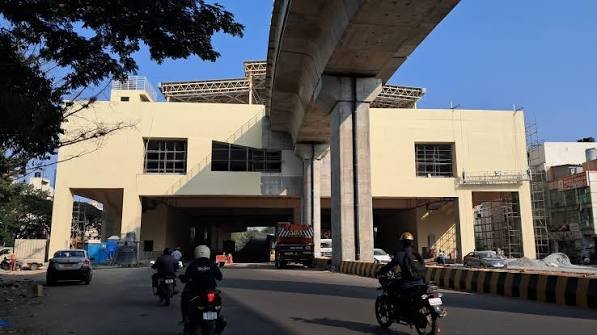
This is where things are improving quite a bit. The Yellow Line of Namma Metro serves this area directly, with both Central Silk Board and Bommanahalli stations located right in the vicinity. Central Silk Board station itself has been designed as a future interchange point, eventually connecting the Yellow Line with the upcoming Blue Line, which will make Silk Board an even more important hub for cross-city travel once that connection goes live.
Bommanahalli station sits close by as well, roughly a short walk from the flyover, giving commuters another convenient access point depending on which side of the junction they’re approaching from.
If you’re commuting toward Electronic City or heading into the city from the south, using the metro for the main stretch and switching to an auto or cab for the last mile is often a smarter bet than driving straight through the junction, particularly during peak hours when road congestion here can be severe.
Nearby Landmarks Worth Knowing
Despite its reputation as a traffic bottleneck, the area around Silk Board is home to plenty of useful landmarks and neighbourhoods.
- Central Silk Board office — The government office that gives this junction its name, located right at the intersection.
- Madiwala Lake — A peaceful green space nearby, popular for morning walks, offering a nice break from the surrounding traffic chaos.
- Agara Lake — Another well-known lake close by, frequented by residents for walks and light recreation.
- BTM Layout — A large residential and commercial neighbourhood adjoining Silk Board, home to numerous apartments, offices, and eateries.
- Fortune Summit Business Park — One of several business parks in the vicinity, contributing to the heavy office-hour traffic through this junction.
Bus Stops and Local Transport Options
The Central Silk Board Bus Stand, situated right under the flyover, is one of Bengaluru’s busiest transit hubs, serving thousands of commuters daily. BMTC buses run through here every 5-10 minutes during peak hours, connecting Silk Board with Electronic City, BTM Layout, Koramangala, HSR Layout, and several other key parts of the city.
For those heading to the airport, dedicated Vayu Vajra (KIA) buses also operate through this stretch, offering a comfortable alternative to driving yourself, especially given how congested this junction can get at various points during the day.
For last-mile connectivity, autos are easily available around the bus stand and metro stations, and app-based cabs operate throughout the day and night in this area, given how central Silk Board is to Bengaluru’s broader transport network.
Best Time to Travel Through Silk Board
Given its reputation, timing matters more here than almost anywhere else in Bengaluru. Weekday mornings between 9 and 11 AM and evenings from 6 to 9 PM see the heaviest congestion, largely driven by the massive volume of IT commuters moving between Electronic City and the rest of South Bengaluru. If your schedule has any flexibility, shifting your travel outside these windows, or relying on the metro instead of driving, can save you a genuinely significant amount of time and frustration.
FAQs
Q1. Is the metro a reliable way to avoid Silk Board traffic?
Yes, using the Yellow Line to reach Central Silk Board or Bommanahalli station and then switching to an auto or cab for the last stretch is generally far more predictable than driving through the junction during peak hours.
Q2. What’s the best route from Electronic City to Koramangala avoiding maximum congestion?
Hosur Road to Silk Board followed by the Outer Ring Road toward Koramangala is the standard route, though checking live traffic before you start is wise since congestion levels here can shift quickly through the day.
Q3. Are airport buses available directly from Silk Board?
Yes, Vayu Vajra (KIA) buses operate through this stretch, offering a convenient way to reach the airport without driving yourself through the city’s traffic.
Q4. Will the upcoming Blue Line interchange actually reduce congestion at Silk Board?
The metro interchange hub connecting the Yellow Line and Blue Line is specifically planned to ease pressure on this junction by giving commuters a stronger public transport alternative, though as with most infrastructure upgrades, the real impact will become clearer once the interchange is fully operational.

