Ask a Mumbaikar for the actual name of “Dadar TT” and most will draw a blank — it’s officially Khodadad Circle, but decades of local shorthand turned “Tram Terminus” into the two letters everyone still uses. This junction sits in what’s considered Mumbai’s first planned neighbourhood, the beating heart of the city’s Marathi cultural life, and now home to a brand-new underground metro station that opened in May 2025. Whether you’re heading to Ruia College, catching a train, or navigating this stretch for the first time, here’s how the pieces connect.
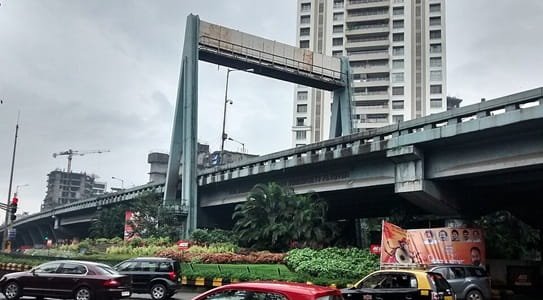
Quick Overview
| Aspect | Details |
| Location | Khodadad Circle (Dadar T.T.), Dadar East, Mumbai |
| Also known as | Jagannath Shankar Seth Flyover, Dr. Babasaheb Ambedkar Marg |
| Nearest metro | Dadar (Aqua Line 3), opened 9 May 2025 |
| Nearest railway | Dadar (Central and Western Railway junction) |
| Nearby landmarks | Ruia College, Parsi Colony, Shivaji Park |
| Public transport options | BEST buses, Mumbai Metro, Central and Western suburban trains, autos, cabs |
Why Dadar TT Sits at the Centre of So Much Mumbai History
Dadar holds the distinction of being Mumbai’s first planned area, and it’s long functioned as a cultural anchor for the city’s Marathi-speaking population — a densely packed neighbourhood that’s equal parts residential, shopping district, and transit hub. Khodadad Circle earned its “TT” nickname from the tram terminus that once operated here, and even though trams disappeared from Mumbai’s streets long ago, the name never left local vocabulary.
What’s genuinely new here is the metro. Dadar Station on Aqua Line 3, the Colaba-Bandra-SEEPZ corridor, opened as an underground station in May 2025, giving this already well-connected junction a fourth major transit mode alongside its existing rail, bus, and road network.
Getting to Dadar TT by Road
From Dadar Railway Station: The flyover sits roughly 3 minutes on foot, close enough that most commuters simply walk rather than look for transport.
From Wadala: Vadala Road station sits about 17 minutes on foot from Dadar TT, making this a workable option if you’re coming from the eastern side and don’t mind the walk.
From Parel or Lower Parel: Local roads and BEST bus routes connect directly, given how central Dadar sits relative to Mumbai’s inner suburbs.
Along Dr. Babasaheb Ambedkar Marg: This is the formal road name for the flyover stretch itself, useful to know if you’re using a map app that doesn’t recognize “Dadar TT” directly.
Given how many transit lines converge on this one junction, expect a genuinely dense mix of pedestrians, buses, and vehicles at almost any hour — this isn’t a stretch with a quiet off-peak window in the usual sense.
Metro Connectivity at Dadar
Dadar Metro Station runs five entry gates — B-3, A-2, A-3, A-4, and B-1 — reflecting how much foot traffic this station is built to handle. Trains run from 6:21 AM to nearly 11 PM, with peak hours running roughly 8 to 10 AM and 5 to 9 PM, when off-peak scheduling switches over to tighter frequency.
Parking is available at the station, operated by MMRC, alongside a direct walkway connection to Dadar’s railway platforms — a genuine convenience for anyone switching between suburban rail and the metro without needing to step onto the street at all.
Nearby Landmarks Worth Knowing
- Ruia College — A well-known educational institution just 3 minutes from Khodadad Circle.
- Parsi Colony — A historic residential enclave close to the flyover, reflecting Dadar’s layered community history.
- Shivaji Park — One of Mumbai’s most significant public grounds, closely associated with the city’s cultural and political life.
- BEST Workshop, Dadar — A recognizable local landmark near Khodadad Circle, frequently cited in bus route directions.
- Kapole Niwas / J.N. Varma Chowk — A nearby junction serving as a useful reference point for this stretch.
Bus Stops and Local Transport Options
BEST buses converge on Khodadad Circle in genuinely large numbers — routes including 11, 15, 66, 67, 88, 110, 165, 169, and 172, alongside several limited-stop AC services, all pass through this one junction. Between the standard and AC-branded services, this is one of the more comprehensively covered bus stops anywhere in Mumbai.
For last-mile travel to nearby residential pockets like Parsi Colony or Hindu Colony, autos remain the practical choice, particularly given how dense the pedestrian and vehicle traffic gets right at the circle itself.
Best Time to Travel Through Dadar TT
Peak metro hours — 8 to 10 AM and 5 to 9 PM — overlap almost exactly with the busiest windows for suburban rail and bus traffic here, meaning this junction genuinely doesn’t have a single quiet stretch during standard working hours. If your schedule allows flexibility, travelling mid-morning between 10 AM and 5 PM, or after 9 PM, offers a noticeably calmer experience across all four transit modes converging here.
FAQs
Q1. Why is Khodadad Circle called Dadar TT?
“TT” stands for Tram Terminus, a reference to the old tram service that once ended here — the name stuck in local usage long after trams stopped running in Mumbai.
Q2. When did the Dadar Metro station open?
It opened on 9 May 2025 as part of Aqua Line 3, the Colaba-Bandra-SEEPZ corridor, and it’s an underground station directly linked to the railway platforms via a dedicated walkway.
Q3. Is Dadar TT the same as Dadar Railway Station?
No — they’re close but distinct. Dadar Railway Station is about 3 minutes on foot from Khodadad Circle (Dadar TT), and the two function as separate but tightly connected transit points.
Q4. Are BEST buses a reliable way to reach Dadar TT from other parts of Mumbai?
Yes — given how many routes converge specifically at Khodadad Circle, including several AC services, this is genuinely one of the best-served bus junctions in the city.

