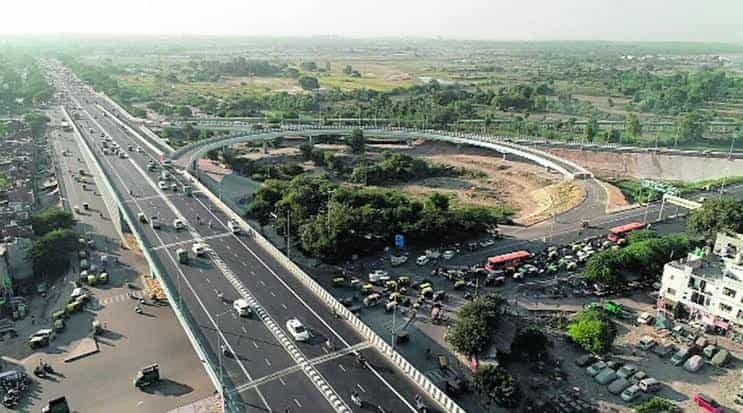
If you commute along Delhi’s Outer Ring Road near Azadpur or Adarsh Nagar, Mukundpur Flyover is a stretch you already know well. This six-lane structure at Mukundpur Chowk genuinely transformed one of North Delhi’s most heavily used junctions, handling around 1.75 lakh vehicles daily and forming the final piece of the ambitious Vikaspuri-Wazirabad signal-free corridor. Whether you’re commuting daily, heading toward Majlis Park, or simply navigating this important North Delhi crossing for the first time, understanding how Mukundpur Flyover connects everything makes your travel considerably smoother.
Quick Overview
| Aspect | Details |
| Location | Mukundpur Chowk, Outer Ring Road, North Delhi |
| Structure | Six-lane flyover, part of the Vikaspuri-Wazirabad signal-free corridor |
| Daily traffic | Approximately 1.75 lakh vehicles |
| Nearby localities | Azadpur, Majlis Park, Adarsh Nagar |
| Nearby metro lines | Lines 2 and 7 (Yellow Line and Pink Line) |
| Public transport options | DTC buses, Delhi Metro, suburban trains, autos, cabs |
Why Mukundpur Flyover Was Such a Genuinely Significant Addition to North Delhi
Mukundpur Chowk was historically one of the busiest junctions along the Outer Ring Road, handling approximately 1.75 lakh vehicles daily before this flyover’s completion. This six-lane structure was inaugurated as the final piece of the Vikaspuri-Wazirabad signal-free elevated corridor, a project originally conceptualised during the Sheila Dikshit government and completed across three elevated stretches — Vikaspuri-Meera Bagh, Mangolpuri-Madhuban Chowk, and Madhuban Chowk-Mukarba Chowk.
Given how much traffic this specific junction handled, its completion genuinely reduced travel delays for every vehicle passing through, saving at least four minutes per trip and benefiting not just local North Delhi commuters but also inter-state public and commercial vehicles using NH-1 through this stretch. Alongside the flyover’s opening, plans were also announced for a 9-km cycle track running from Mukundpur to Majnu-ka-Tilla crossing, reflecting the broader vision to cut pollution and ease traffic across this entire corridor.
How to Reach Mukundpur Flyover by Road
From Azadpur: Head along the Outer Ring Road toward Mukundpur Chowk, and you’ll access the flyover directly, connecting you further along this signal-free stretch toward North Delhi.
From Majlis Park: Continue along the connecting roads, and Mukundpur Flyover becomes accessible within a short distance, given how closely these areas are linked along this corridor.
From Adarsh Nagar: Local roads bring residents from this neighbouring locality directly toward Mukundpur, making this flyover an important daily crossing point for cross-town commuters in this belt.
Toward Wazirabad or Vikaspuri: Once on the flyover, continuing along the broader signal-free corridor connects you toward these distant points without a single traffic signal, making this one of Delhi’s more efficient long-distance road routes.
Given how much through-traffic this junction handles, given its role connecting the full Vikaspuri-Wazirabad corridor, it’s worth checking live traffic conditions before setting out during peak hours.
Metro Connectivity Near Mukundpur Flyover
Delhi Metro Lines 2 and 7 (the Yellow Line and Pink Line) both serve areas near Mukundpur Flyover, giving residents in this belt genuine access to Delhi Metro’s broader network. Given the corridor’s proximity to localities like Jahangirpuri and Majlis Park, combining a short auto or cab ride with the nearest metro station remains a practical approach for anyone wanting to skip road traffic on longer journeys.
Nearby Landmarks Worth Knowing
Mukundpur Flyover sits in a genuinely well-established part of North Delhi, with several notable localities nearby.
- Azadpur — A significant neighbouring locality, home to one of Asia’s largest wholesale fruit and vegetable markets, contributing to the area’s daily commercial traffic.
- Majlis Park — An important nearby area, home to its own metro station and serving as a key reference point for this corridor.
- Adarsh Nagar — A well-established residential locality connected directly to Mukundpur through the Outer Ring Road.
- Christian Kabristan — A notable local landmark near the flyover, frequently used as a directional reference point for bus routes.
- G. Public School (Sant Gyan Public School) — A well-known educational institution in the vicinity, contributing to the area’s daily school-hour traffic.
Bus Stops and Local Transport Options
DTC buses serve Mukundpur Flyover extensively, with well-known stops including Azadpur, Christian Kabristan, Mukund Pur Chowk, and Mukund Pur Crossing serving as key boarding points for numerous routes running from early morning until past midnight. Given how central this junction is to North Delhi’s road network, a genuinely wide spread of routes converge here, connecting Mukundpur to various parts of the city.
For last-mile connectivity, autos are readily available near the main bus stops, and app-based cabs operate throughout the day, making it convenient to reach your exact destination even within the surrounding residential areas.
Best Time to Travel Through Mukundpur Flyover
Given how much this junction handles — daily residential commuters combined with substantial inter-state and commercial vehicle movement along NH-1 — timing genuinely affects your travel experience here. Weekday mornings between 9 and 11 AM and evenings from 6 to 8:30 PM tend to see the heaviest congestion, driven by regular office commute patterns overlapping with steady highway traffic. If your schedule allows some flexibility, shifting your travel outside these windows can genuinely reduce your travel time through this stretch, particularly given how much smoother this corridor has become since the flyover’s completion.
FAQs
Q1. How much travel time did Mukundpur Flyover actually save commuters?
Each vehicle passing through this junction saves at least four minutes, and this benefit extends to all traffic on NH-1, including inter-state public and commercial vehicles using this corridor.
Q2. What is the Vikaspuri-Wazirabad corridor, and how does Mukundpur Flyover fit in?
It’s a completely signal-free elevated route connecting Vikaspuri in West Delhi to Wazirabad in North Delhi across three stretches, with the Mukundpur Chowk flyover representing the final piece that completed this entire corridor.
Q3. Is there a cycle track planned along this corridor?
Yes, plans included a 9-km cycle track running from Mukundpur to Majnu-ka-Tilla crossing, aimed at cutting down pollution and easing traffic along this stretch.
Q4. Are DTC buses a reliable way to commute through Mukundpur daily?
Yes, with numerous routes serving stops like Azadpur, Mukund Pur Chowk, and Mukund Pur Crossing from early morning until past midnight, DTC buses offer a genuinely comprehensive option for daily commuters in this part of North Delhi.

