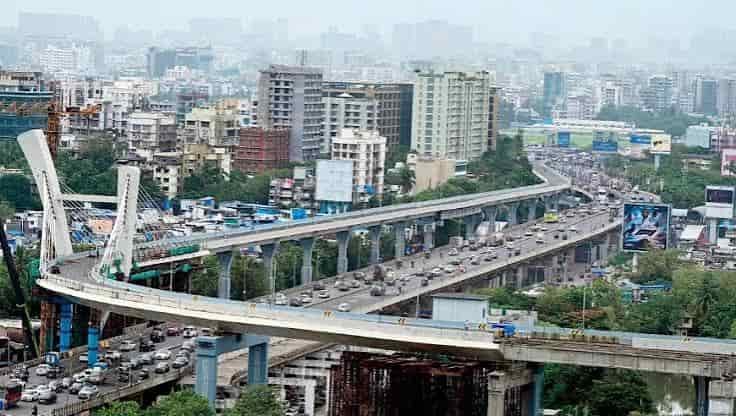
If you commute between Mumbai’s western and eastern suburbs, the Santacruz-Chembur Link Road, universally known as SCLR, is genuinely one of the city’s most transformative pieces of infrastructure. What used to be a 60-90 minute journey between Santacruz and Chembur now takes just 15-20 minutes, thanks to India’s first double-decker flyover design running along this 6.45 km corridor. Whether you’re commuting daily between the airport belt and BKC, heading toward Chembur, or simply navigating this genuinely game-changing East-West corridor for the first time, understanding how SCLR connects everything makes your travel considerably faster.
Quick Overview
| Aspect | Details |
| Full name | Santacruz-Chembur Link Road (SCLR) |
| Length | 6.45 km, six-lane arterial road |
| Termini | Western Express Highway (Santacruz) to Eastern Express Highway (Chembur) |
| Structure | India’s first double-decker flyover; upper deck for vehicles, lower deck for Metro Line 2 |
| Opened | 18 April 2014; extension with cable-stayed bridge opened 14 August 2025 |
| Nearby landmarks | Bandra Kurla Complex, Kalina, Kurla, Amar Mahal Junction |
Why SCLR Genuinely Transformed Mumbai’s East-West Commute
The Santacruz-Chembur Link Road connects the Western Express Highway in Santacruz with the Eastern Express Highway in Chembur, and its completion in 2014 provided signal-free connectivity that drastically cut east-west commute times. Before this road existed, crossing between these two sides of the city could take up to an hour; SCLR reduced this to around 15 minutes, genuinely alleviating congestion at key junctions like Vakola, Sion, Kalanagar, and Amar Mahal.
This project, constructed as part of the World Bank-funded Mumbai Urban Transport Project, faced genuinely severe delays — construction began in 2007 despite groundwork originally planned for 2003, and the project missed 12 deadlines before finally completing more than 11 years after its original November 2004 target. The World Bank actually withdrew funding midway through due to these repeated delays, with the Mumbai Metropolitan Region Development Authority (MMRDA) financing the second phase using its own funds. More recently, on 14 August 2025, a significant extension was completed, featuring a cable-stayed bridge over the Western Express Highway — Asia’s first cable-stayed bridge with a 100-metre sharp curvature, standing 25 metres above ground and using an innovative Y-shaped pylon for structural efficiency.
How to Reach SCLR Flyover by Road
From Santacruz (Western Express Highway): Access the upper level of the double-decker flyover via Vakola Junction Road, near Santacruz, to reach the Eastern Express Highway directly.
From Kurla: Take the lower level of the flyover to access Kurla and Lokmanya Tilak Terminus, given how the road’s alignment passes adjacent to the south-west end of this important railway terminus.
From Chembur or Tilak Nagar: Travel in the reverse direction along SCLR, and you’ll reach the Eastern Express Highway via the Amar Mahal junction, where the road splits into three arms forming its distinctive double-decker structure.
From Kalina or BKC: The SCLR Extension’s first phase, connecting Kalina, Bandra Kurla Complex, and Kurla bus depot, offers direct access toward this important business district, significantly decongesting the Imam Ahmad Raza Junction on CST Road in the process.
Given how much traffic this corridor handles — an estimated 200,000 vehicles daily on the six-lane road — it’s worth checking current traffic conditions before setting out, particularly near junctions where MMRDA has continued adding flyovers and underpasses to address ongoing bottlenecks.
Metro Connectivity Along SCLR
This is genuinely one of the most remarkable features of this corridor — the lower deck of the double-decker flyover accommodates Mumbai Metro Line 2, meaning rail and road infrastructure share the same elevated structure along significant stretches of SCLR. This design reflects a genuinely efficient use of Mumbai’s limited urban space, allowing both vehicular traffic and metro services to operate along the same corridor without requiring separate land acquisition.
Given the road’s proximity to Kurla and BKC, commuters travelling along this corridor have increasingly convenient access to Mumbai’s broader metro network, particularly as extensions and connecting projects continue to develop around this stretch.
Nearby Landmarks Worth Knowing
SCLR connects some of Mumbai’s most significant business, residential, and transit zones.
- Bandra Kurla Complex (BKC) — Mumbai’s premier business district, increasingly well connected via the SCLR Extension’s Kalina-BKC-Kurla stretch.
- Kalina — A significant locality along this corridor, home to the University of Mumbai’s Kalina campus and benefiting from the recent extension project.
- Kurla and Lokmanya Tilak Terminus — Major railway hubs directly accessible via the lower deck of the double-decker flyover.
- Amar Mahal Junction — The eastern terminus point where SCLR meets the Eastern Express Highway in Chembur, historically a significant traffic bottleneck now eased by this corridor.
- Vakola — A key junction near the western end of SCLR, now featuring the genuinely striking new cable-stayed bridge as part of the 2025 extension.
Bus Stops and Local Transport Options
BEST (Brihanmumbai Electric Supply and Transport) buses serve areas along SCLR extensively, connecting Santacruz, Kalina, Kurla, and Chembur to various parts of Mumbai. Given the corridor’s role easing congestion at multiple major junctions, numerous bus routes have benefited from smoother travel times since SCLR’s completion.
For last-mile connectivity, autos and app-based cabs are widely available at both ends of this corridor and at intermediate points like Kurla and BKC, making it convenient to reach your exact destination once you’ve traversed the main link road.
Best Time to Travel Through SCLR
Given how much this corridor handles — an estimated 200,000 vehicles daily combined with steady BKC-bound office traffic — timing genuinely affects your travel experience here despite the road’s overall efficiency gains. Weekday mornings and evenings see the heaviest volume, particularly near junctions like Vakola and Kurla where MMRDA has continued adding infrastructure to address persistent bottlenecks even after SCLR’s main completion. If your schedule allows some flexibility, travelling just outside standard peak hours will help you get the full benefit of this corridor’s dramatically reduced travel times.
FAQs
Q1. How much time does SCLR actually save compared to the old route?
It reduced what used to be a 60-90 minute journey between the western and eastern suburbs down to just 15-20 minutes, genuinely transforming east-west connectivity in Mumbai.
Q2. What makes SCLR’s design unique in Mumbai?
It features India’s first double-decker flyover, with the upper deck carrying vehicular traffic and the lower deck accommodating Mumbai Metro Line 2, an efficient combination of road and rail infrastructure sharing the same elevated structure.
Q3. What was added to SCLR in the 2025 extension?
A cable-stayed bridge over the Western Express Highway was completed and opened on 14 August 2025, described as Asia’s first cable-stayed bridge with a 100-metre sharp curvature, enhancing connectivity from Navi Mumbai, the Eastern Express Highway, and BKC toward the airport.
Q4. Why does SCLR still see congestion at certain junctions despite easing east-west travel?
Bottlenecks persist at several stretches along the route, prompting MMRDA to consider building additional flyovers and underpasses, even though the overall journey between areas like Chembur and Kurla remains considerably smoother than before the road’s construction.

