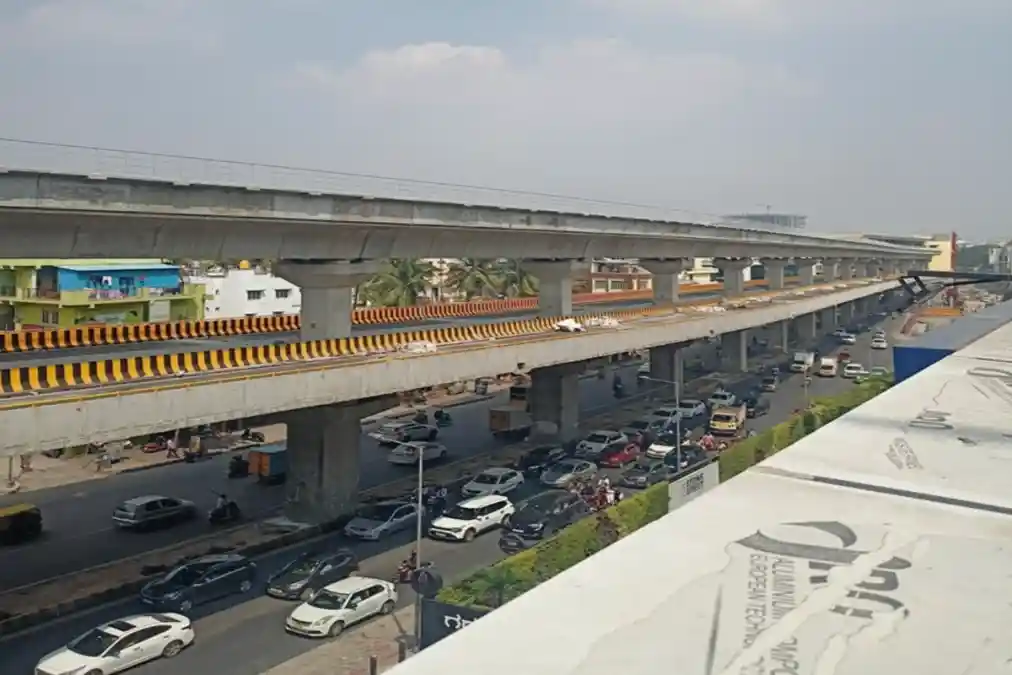
If you commute anywhere between HSR Layout, BTM Layout, and Jayanagar, genuinely good news arrived in Bengaluru this year. The city’s first double-decker flyover — carrying both Namma Metro trains above and vehicle traffic below — is now fully operational, offering long-awaited relief at one of the city’s most notoriously congested junctions. Whether you’re commuting daily through Central Silk Board, heading toward Ragigudda, or simply trying to understand this landmark piece of infrastructure, here’s a practical breakdown of how it works and what it means for your commute.
Quick Overview
| Aspect | Details |
| Location | Between Central Silk Board and Ragigudda, Bengaluru |
| Structure type | South India’s first road-cum-rail double-decker flyover |
| Upper tier | Namma Metro (Yellow Line: RV Road to Bommasandra) |
| Lower tier | Vehicular traffic |
| Built by | Bangalore Metro Rail Corporation Limited (BMRCL), constructed by Afcons Infrastructure |
| Fully operational | All five flyovers opened by April 2026 |
| Nearby metro stations | Central Silk Board, Ragigudda |
Why This Double-Decker Flyover Is Such a Big Deal for Bengaluru
The Ragigudda-Silk Board Flyover is genuinely the first structure of its kind in Bengaluru, and South India’s first road-cum-rail double-decker flyover overall. Built by BMRCL as part of the elevated metro project along the Outer Ring Road, this five-level structure was constructed at what is widely regarded as Bengaluru’s second busiest junction — a genuinely complex engineering feat given the sheer volume of traffic this area handles daily.
Afcons Infrastructure, the company that built the five flyovers as part of this larger contract, completed the project incrementally. Flyovers were opened for vehicular traffic on a trial basis starting in July 2024, with the final sections — flyovers D and E — opening for operational traffic by 25 April 2026, making all five flyovers fully functional. Since then, another section connecting HSR 5th Main to Jayanagar (Ragigudda) opened to public traffic on a trial basis on 22 April 2026, extending the relief this structure offers to an even wider stretch of commuters.
How to Reach the Double Decker Flyover by Road
From HSR Layout: Head toward the Outer Ring Road via HSR 5th Main, and you’ll access the double-decker structure directly, connecting you toward Jayanagar and Ragigudda without navigating the ground-level Silk Board junction congestion.
From BTM Layout: The flyover’s ramp system connects this area directly to the elevated structure, given how the BMRCL specifically built taller pillars — around 24 metres — to allow the ramp from HSR Layout to BTM Layout to traverse over both Silk Board Junction and the newly constructed Hosur Road ramp.
From Central Silk Board: This marks one end of the double-decker structure, giving vehicles heading toward Ragigudda direct access without stopping at the traditionally signal-heavy junction below.
From Jayanagar (Ragigudda): Once integrated with the existing road flyover on the BTM Layout side, motorists here can travel toward Ragigudda Metro Station without facing a single traffic signal, a genuinely significant change from the pre-2026 commuting experience.
Given how recently these sections have opened, it’s worth checking current traffic advisories occasionally, since commuting patterns are still adjusting to this genuinely transformative new route.
Metro Connectivity on the Double Decker Flyover
The upper tier of this structure carries Namma Metro’s Yellow Line, running between RV Road and Delta Electronics Bommasandra, with Central Silk Board and Ragigudda serving as the two key metro stations along this specific stretch. This dual-purpose design — metro above, vehicles below — is precisely what makes this flyover such a significant milestone, since it maximises the use of limited urban space at one of the city’s most constrained junctions.
Given Bengaluru’s broader push toward more double-decker infrastructure, Deputy Chief Minister D K Shivakumar has indicated that this Silk Board-Ragigudda structure will serve as a pilot model for future projects across the city, wherever metro rail connectivity is planned and construction hasn’t yet begun.
Nearby Landmarks Worth Knowing
The double-decker flyover corridor connects some of Bengaluru’s most significant residential and commercial localities.
- Central Silk Board — One of Bengaluru’s busiest junctions, marking one end of the double-decker structure and a major daily commute point for IT professionals.
- Ragigudda — The other key endpoint, connecting toward Jayanagar and serving as an important metro station along the Yellow Line.
- HSR Layout — A significant residential and commercial locality connected directly via the HSR 5th Main ramp.
- BTM Layout — Another major residential area benefiting from the new ramp connectivity this flyover provides.
- Jayanagar — A well-established Bengaluru neighbourhood now more directly accessible via the extended trial section.
Bus Stops and Local Transport Options
BMTC buses continue to serve the areas around Central Silk Board, HSR Layout, BTM Layout, and Jayanagar extensively, with the Central Silk Board Bus Stand remaining one of the busiest transit hubs in this part of the city. Given how central this junction is to Bengaluru’s southern transport network, numerous routes converge here throughout the day.
For last-mile connectivity, autos are readily available around the main bus stops and metro stations, and app-based cabs operate throughout the day, given the steady commuter demand this junction has always attracted.
Best Time to Travel Through the Double Decker Flyover
Given how significant this infrastructure change is, traffic patterns are still settling into their new rhythm, but weekday mornings between 9 and 11 AM and evenings from 6 to 9 PM remain the times to expect the heaviest volume, driven by IT commuters moving between Electronic City and the rest of South Bengaluru. That said, given the dramatic relief this double-decker structure has already brought to Silk Board Junction, even peak-hour travel through this stretch should feel considerably smoother than the pre-2026 congestion commuters previously endured.
FAQs
Q1. Is the double-decker flyover fully operational now?
Yes, all five flyovers of the Central Silk Board double-decker structure became fully operational by 25 April 2026, with an additional extended section toward Jayanagar (Ragigudda) opening on a trial basis shortly after, on 22 April 2026.
Q2. How does the double-decker design actually work?
The upper tier carries Namma Metro’s Yellow Line trains between RV Road and Bommasandra, while the lower tier handles regular vehicular traffic, allowing both rail and road transport to share the same limited space at this constrained junction.
Q3. Will Bengaluru see more double-decker flyovers like this one?
Yes, Deputy Chief Minister D K Shivakumar has indicated plans to build similar flyover-cum-metro structures across the city wherever new metro lines are planned, using this Silk Board-Ragigudda project as the pilot model.
Q4. Can I now travel from HSR Layout to Ragigudda without hitting a traffic signal?
Yes, once fully integrated with the existing road flyover on the BTM Layout side, motorists can travel from HSR Layout toward Ragigudda Metro Station without facing a single traffic signal, a genuinely significant improvement over the previous route.

