Fifteen years is a long time for a metro station to keep pace with a locality’s growth, and Nangloi has changed shape considerably since its Green Line stop opened back in April 2010. Rohtak Road runs right past it, the railway station sits close enough to share a footbridge, and dozens of bus routes converge here from every direction of West Delhi. For anyone trying to get in or out of this stretch — whether that’s a daily commute, a trip to Bahadurgarh, or a first-time visit — the trick is knowing which gate, which platform, and which bus actually gets you where you’re going without the guesswork.
Quick Overview
| Aspect | Details |
| Location | Nangloi, on Rohtak Road (NH9), West Delhi |
| Metro line | Green Line, inaugurated 2 April 2010 |
| Main road connections | Rohtak Road, Najafgarh Road |
| Nearby rail | Nangloi Railway Station |
| Nearby landmarks | Maharaja Surajmal Stadium, Nangloi Chowk, Rajdhani Park |
| Public transport options | DTC and cluster buses, Delhi Metro, autos, cabs |
Why This Junction Sits at Such a Practical Crossing Point
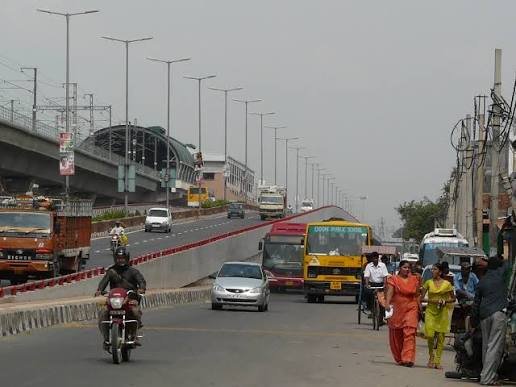
Nangloi’s flyover and metro station sit almost on top of each other, right on Rohtak Road, close enough to the railway station that the three form one connected transit cluster rather than three separate stops scattered around the locality. That clustering is exactly what makes Nangloi useful — you’re rarely more than a short walk from whichever mode of transport suits your route, whether that’s catching a train, boarding a bus, or stepping onto the metro platform.
The Green Line here runs in two directions that matter for very different trips. Head one way and you’re bound for Brigadier Hoshiyar Singh in Bahadurgarh, passing through Mundka and Ghevra and crossing into Haryana. Head the other way and you’re headed toward Inderlok and Kirti Nagar, plugging straight into Central and North Delhi. Knowing which platform you need before you climb the stairs saves a wasted trip up and back down.
How to Reach Nangloi Flyover by Road
From Bahadurgarh or Mundka: Rohtak Road brings you directly into Nangloi from the Haryana side, with the flyover marking your entry point into this stretch of West Delhi.
From Rajouri Garden or Tilak Nagar: These areas connect through the Green Line corridor itself, though by road, Najafgarh Road and connecting local streets bring you toward Nangloi Chowk from the south.
From Kirti Nagar or Inderlok: Rohtak Road again serves as the connecting artery here, running straight through toward Nangloi from Central Delhi’s direction.
Around Jwala Puri: This neighbouring locality sits close enough that its own bus depot functions almost as an extension of the Nangloi transit cluster.
Given the sheer number of bus routes converging on this stretch — genuinely dozens, by some counts — it’s worth checking live traffic before setting out during school and office hours, when the road narrows with parked buses waiting their turn.
Metro Connectivity at Nangloi
Nangloi Metro Station runs two elevated side platforms. Platform 1 heads westbound toward Brigadier Hoshiyar Singh, covering Mundka and Ghevra before crossing into Haryana. Platform 2 heads eastbound through Inderlok and Kirti Nagar, opening up interchanges into the wider Delhi network from there.
Trains run frequently through peak hours, following the standard DMRC schedule, though Sundays and public holidays can see slightly adjusted timings — worth a quick check with official DMRC sources if your trip falls on one of those days. The station has two gates, and given how many bus stops cluster around each one differently, confirming which exit you need before boarding saves a longer walk than necessary.
Nearby Landmarks Worth Knowing
- Maharaja Surajmal Stadium — A well-known sports facility close to the station, often used as a locality reference point.
- Nangloi Railway Station — Sitting just a minute’s walk from the metro, effectively forming one transit hub with it.
- Nangloi Chowk — The commercial heart of the immediate area, a common destination for local shopping and errands.
- Rajdhani Park — A nearby green space and bus stop reference point.
- Qamruddin Nagar — A neighbouring locality connected via the railway station’s Gate 2 side.
Bus Stops and Local Transport Options
The bus network around Nangloi is dense even by Delhi standards. Routes including 236, 254, 567A, 849, 926, 949, and 978 all stop within a few minutes of the metro station, with Jwala Puri Nangloi Depot serving as one of the closest boarding points at just a minute’s walk. Depending on which side of the complex you’re approaching from, stops like Nangloi (Najafgarh Road) or Sultan Puri Crossing offer alternative pickup points.
For last-mile travel, autos cluster reliably near both metro gates, and app-based cabs pick up without much wait given the steady footfall this junction sees throughout the day.
Best Time to Travel Through Nangloi Flyover
Morning and evening rush hours bring the heaviest crowding, driven largely by the sheer volume of bus routes loading and unloading passengers simultaneously along Rohtak Road. If your schedule allows flexibility, travelling an hour either side of the standard 9-11 AM and 6-8:30 PM windows makes a genuinely noticeable difference here, particularly if you’re trying to catch a specific bus rather than just the metro.
FAQs
Q1. Which platform do I need at Nangloi to reach Bahadurgarh?
Platform 1, serving westbound trains toward Brigadier Hoshiyar Singh via Mundka and Ghevra.
Q2. Is Nangloi Railway Station connected to the metro station directly?
Yes — they sit close enough together that most commuters treat them as one combined transit point, with just a short walk between the two.
Q3. What’s the fastest way to reach Central Delhi from Nangloi?
Board Platform 2 toward Inderlok or Kirti Nagar, both of which offer further interchange options into the core Delhi Metro network.
Q4. Are there enough bus options near Nangloi for someone without a metro card?
Yes — this is genuinely one of the more bus-dense junctions in West Delhi, with dozens of DTC and cluster routes converging here from Bahadurgarh, Central Delhi, and the surrounding residential colonies.

